

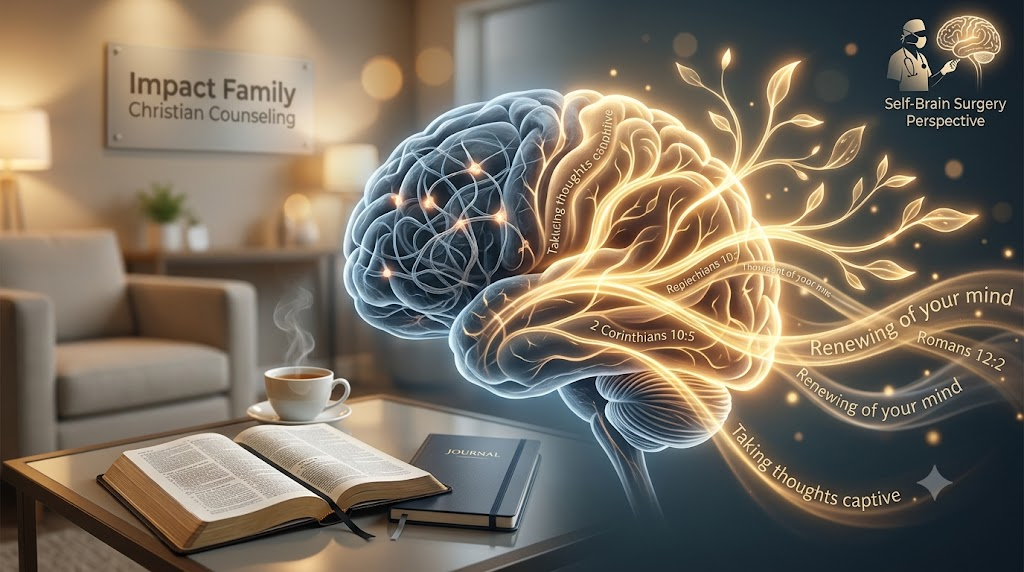
In the fast-paced, high-stress rhythm of South Florida life—navigating the daily grind of Broward County, managing multi-generational households, and processing an endless stream of digital chaos—our minds can easily feel overloaded. When personal crises hit, whether it is a painful divorce, a heavy medical diagnosis, or unexpected trauma, secular culture often tells us that our brains are weak, fragile, and permanently damaged by our circumstances. We are told to “honor our feelings” and passively accept our emotional state.
However, groundbreaking discoveries in 21st-century neuroscience are revealing a truth that Scripture has proclaimed all along: your brain is not fixed. It can be physically and structurally rewired, and one of the most powerful catalysts for this transformation is intentional, faith-filled prayer.
In a powerful conversation between renowned neurosurgeons Dr. Ben Carson and Dr. W. Lee Warren on Common Sense with Dr. Ben Carson, the intersection of neuroscience and biblical sufficiency comes alive, providing an extraordinary blueprint for how we handle hardship, anxiety, and grief.
Creation: The Divinely Engineered Brain
God did not design the human brain to be a fragile victim of its environment. It was masterfully engineered with billions of neurons capable of processing immense amounts of information every second. More importantly, God built our minds with an incredible capacity called neuroplasticity—the ability to physically alter its structure based on what we choose to focus on.
Modern scientific research is now documenting the physical mechanics of God’s design. For instance, functional MRI (fMRI) studies conducted by researchers at the University of Pennsylvania scanned individuals before and after a six-week period of practicing daily prayer for just ten minutes a day. The results were astounding: the hippocampus—the specific region of the brain responsible for emotional regulation, resilience, and inner peace—physically increased in size by 22%.
When we actively engage with God through prayer, we are not just practicing a religious ritual; we are participating in a divinely ordained architectural renovation of our minds, making our brains neurologically better equipped to handle stress and hardship.
The Fall: Trauma, Hijacked Chemistry, and Secular Limitations
While God’s original creation was perfect, we live in a fallen world marked by deep brokenness, tragedy, and suffering. Dr. Warren understands this pain intimately. Despite his expertise as a decorated combat neurosurgeon, his world shattered when his 19-year-old son, Mitch, was tragically killed. This catastrophic loss sent him into a profound crisis of faith, wrestling with the heavy, stereotypical questions of how a good God could allow such devastating heartbreak.
In our fallen state, an untrained mind defaults to a “Default Mode Network” that is intensely self-focused and negative. In fact, neuroscience shows that roughly 80% of our baseline automatic thoughts are naturally biased toward negativity or are completely false.
Secular coping frameworks often exacerbate this by teaching people to follow their feelings blindly. However, treating our automatic feelings as absolute truth keeps us trapped in cycles of anxiety and depression. Similarly, issues like addiction represent a severe hijacking of the brain’s divine reward pathways. When people chase quick, effortless dopamine fixes through substances, social media, or toxic behaviors, those short-circuited rewards begin to progressively dominate and control their lives. Secular psychology often attempts to manage these symptoms with a prescription pad or secular clinical paradigms, but science alone cannot fix a broken soul or provide lasting purpose in the wake of tragedy.
Redemption: Actively Taking Thoughts Captive
Redemption changes our position from passive victims of our biological chemistry to active participants in Christ’s healing. Scripture instructs us to “not be conformed to this world, but be transformed by the renewing of your mind” (Romans 12:2). It commands us to “take every thought captive” (2 Corinthians 10:5).
Dr. Warren experienced this redemptive turning point firsthand in an fMRI research lab just a month after his son’s passing. As he watched a patient undergo a brain scan, he observed that when she was instructed to think about her worst memory, her amygdala (the brain’s fear and trauma center) lit up with intense metabolic activity, causing her heart rate and blood pressure to spike. But the moment she was told to shift her focus to a joyful, grateful memory, her fear center immediately calmed down, and her frontal lobes came online.
This scientific observation directly mirrors the redemptive mandate found in Philippians 4:6–7: choosing gratitude over anxiety physically shifts the neurochemical environment of your brain. As believers, we are not left to do this purely through self-reliance; we have been given the mind of Christ. Just as a neurosurgeon intentionally makes structural incisions to heal a physical brain tumor, you can perform “spiritual brain surgery” by choosing to reject toxic, automated thought patterns and replacing them with the truth of God’s Word.
Restoration: Cultivating an Anti-Fragile Spirit
True restoration means allowing God to use the trials we endure to build something stronger and more beautiful than before. In neuroscience, the anterior cingulate cortex is the part of the brain that helps us move past complex grief and emotional stagnation. Remarkably, this region grows stronger and more resilient whenever we intentionally choose to do hard things—such as choosing to get out of bed, choosing to worship through tears, or choosing a healthy discipline over an addictive coping mechanism.
This physical process perfectly aligns with the spiritual trajectory outlined in Romans 5:3–5: suffering produces endurance, endurance produces character, and character produces hope. God does not waste our pain. When we walk through the furnace of suffering with Him, our brains and spirits become “anti-fragile”—meaning we grow more robust, resilient, and hope-oriented not in spite of the hardship, but because of it.
Restoration is fully realized when our private healing transforms into a public purpose. As Dr. Warren and his wife Lisa began sharing their journey of surviving child loss, they found that others experiencing identical tragedies began seeking them out for guidance. Finding a holy purpose in suffering strips the enemy of his victory and turns a meaningless loss into a profound ministry that points others back to the hope of Jesus.
Moving Forward in Faith
If you are currently feeling trapped by severe anxiety, deep grief, or heavy emotional trauma, remember that you are responsible for directing your mind, but you do not have to walk that road isolated.
Seeking professional guidance is a healthy, biblical step. As Dr. Warren notes, if a neurosurgeon’s patient experiences a heart complication, the surgeon calls a specialized cardiologist for assistance while still retaining responsibility for the patient’s care. In the same way, seeking out a dedicated Christian counselor in Fort Lauderdale does not mean abdicating your personal spiritual walk; it means accessing experienced, faith-integrated tools to help you take your thoughts captive more effectively.
Start practicing the discipline of daily mental renewal. Guard what you allow into your mind, limit the noise of cultural comparison, and lean into the structural, life-changing power of prayer.
- Are you ready to take your thoughts captive and experience true restoration? Learn more about our scriptural philosophy by visiting our Counseling Approach Page.
- Ready to begin your healing journey? We provide specialized support tailored to your needs. Explore our faith-based counseling options on our Services Page and schedule your initial intake today on our Session Booking Page.
Recommended Resources & Citations
- Book Recommendation: For a deeper dive into performing “spiritual brain surgery” on your own thought life, read The Lifechanging Art of Self-Brain Surgery by Dr. W. Lee Warren, available at major book retailers and via his official ministry platform at Dr. Lee Warren’s Website.
- Scientific Outbound Reference: For insights on how instant, low-effort dopamine pathways impact mental health, check out educational resources and neurobiology deep-dives available via Huberman Lab.
- Video Reference: Watch the full interview, “Can Prayer Rewire the Brain? A Neurosurgeon Says Yes,” on the official Common Sense with Dr. Ben Carson YouTube Channel to see this profound dialogue in its entirety.