

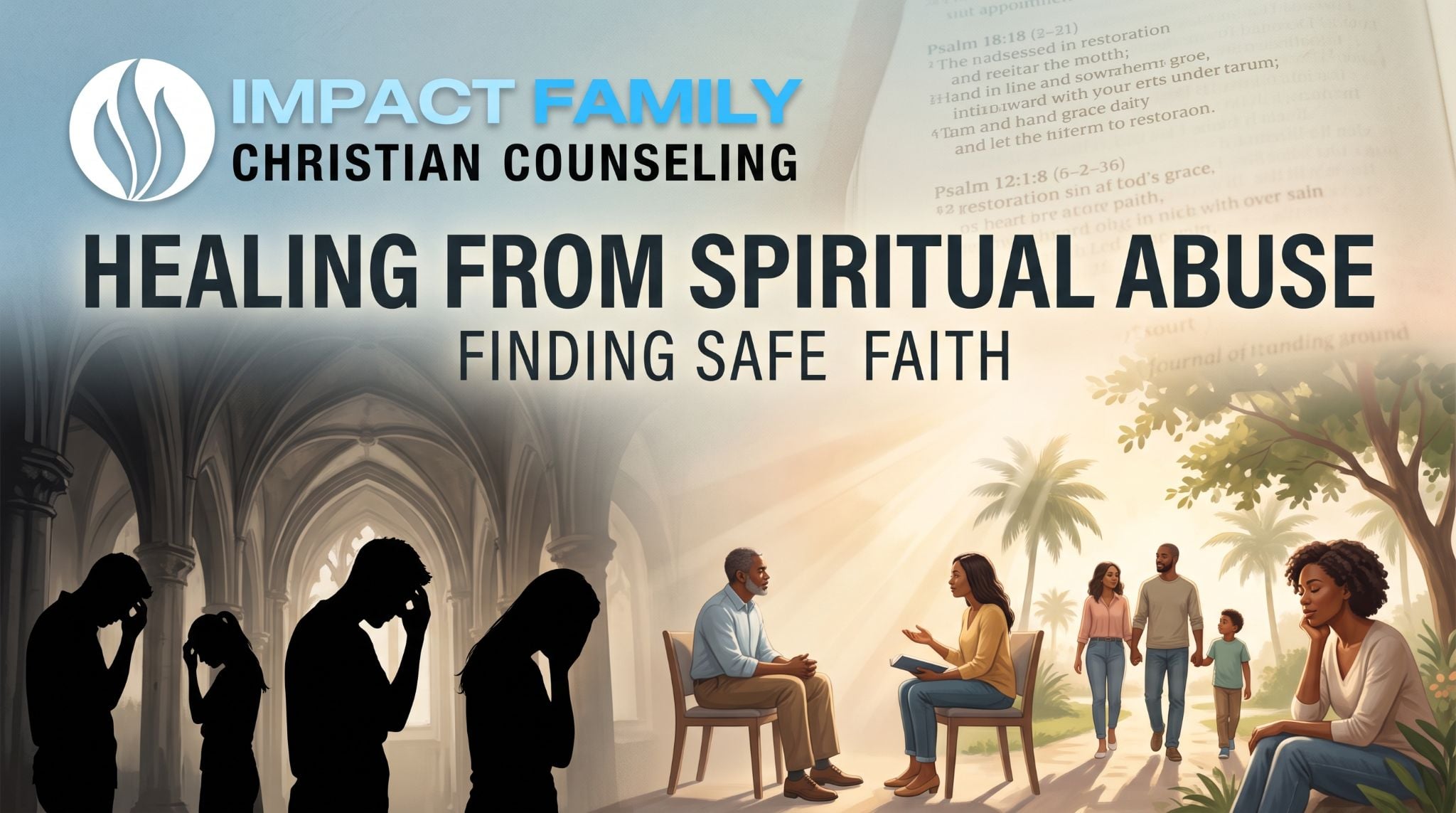
When Sacred Spaces Become Sources of Harm
Imagine walking into a place meant to be an anchor of safety, hope, and grace—only to leave feeling burdened, condemned, and deeply unsafe. If you are seeking spiritual abuse counseling, you are not alone. For many individuals across South Florida, religious trauma is not an abstract thought experiment; it is a painful reality. Church and faith communities are intended to reflect the love, mercy, and unconditional security of God. Yet, when spiritual leadership or religious environments misuse authority, leverage Scripture to control, or weaponize doctrine to enforce compliance, the resulting damage reaches the deepest core of a person’s identity and faith.
You may find yourself sitting in a quiet coffee shop in downtown Fort Lauderdale or driving down I-95, paralyzed by a silent battle. On one hand, you love God and long for spiritual connection; on the other, reading a Bible verse or hearing a sermon triggers a wave of panic, guilt, or anger. If you have experienced this profound dissonance, please hear this first: you are not crazy, you are not broken beyond repair, and your pain is deeply validated.
The Journey Home to Grace: Understanding and Overcoming Spiritual Trauma
1. How Spiritual Abuse Counseling Can Help You Heal
Spiritual abuse is uniquely disorienting because it entangles human mistreatment with the character of God. When a pastor, leader, ministry mentor, or religious institution uses spiritual status to manipulate, isolate, or demean, the victim often internalizes the wound as if God Himself is rejecting them.
In our diverse South Florida community—where vibrant faith traditions meet multi-generational family dynamics, from Anglo and Hispanic/Latino households to Haitian-American and Caribbean congregations—religious pressure can sometimes carry immense cultural weight. You may have been told that questioning leadership is “rebellion,” that suffering in silence is a mark of piety, or that your mental health struggles stem from a lack of faith.
Feeling guarded, fearful, or skeptical after experiencing spiritual control is not a sign of spiritual failure; it is a natural human protective response to mistreatment. Your soul is raising an alarm because something holy was distorted.
2. Unpacking the Root: How Spiritual Misuse Distorts the Soul
At its core, spiritual abuse relies on conditional acceptance and performance-based worth. Leaders or systems operating in unhealthy authority often substitute toxic control for genuine pastoral care.
From a psychological perspective, this trauma activates a chronic state of nervous system overload. When sacred texts, prayer, or community—the very mechanisms meant to bring comfort—are paired with fear, shame, or emotional manipulation, the brain begins to process faith environments as active threats. You may experience symptoms akin to post-traumatic stress: persistent hypervigilance, emotional numbness, intrusive self-doubt, or sudden anxiety attacks when entering a church building.
From a biblical perspective, spiritual abuse is a corruption of divine shepherd leadership. Scripture explicitly warns against shepherding marked by harshness and self-interest rather than self-sacrificing love. When religious authority is weaponized, the grace-filled gospel is quietly replaced by a legalistic contract: Obey to belong; perform to be loved. Unpacking this root requires untangling human power dynamics from the true nature of God’s character.
3. The Healing Pathway: Reclaiming Grace and Regaining Voice
Healing from spiritual trauma does not require you to rush back into organized religion before your heart is ready, nor does it ask you to abandon your faith. True restoration happens through a gentle, step-by-step process that honours both your physiological safety and spiritual autonomy.
- Re-establishing Nervous System and Emotional Safety: Before tackling deep theological questions, your body needs to know it is safe. In counseling, we utilize practical tools to regulate the nervous system—such as grounded breathing exercises, physical movement, and gentle mindfulness anchored in quiet stillness—helping quiet the chronic fight-or-flight response caused by spiritual hypervigilance.
- Separating Human Misconduct from God’s Character: One of the most liberating therapeutic breakthroughs occurs when you begin separating the toxic actions of people from the compassionate heart of Christ. Through cognitive reframing paired with clear biblical context, you can begin dismantling false narratives of shame and condemnation.
- Setting Sacred Boundaries: Recovering your voice means learning that “no” is a safe and holy boundary. We work on developing practical boundary scripts to protect your mental and spiritual energy from individuals or systems that seek to enforce compliance through guilt.
- Rebuilding Authentic Autonomy: Safe faith honors your freedom to ask questions, express doubt, and process pain. You are permitted to move at a pace that respects your story.
As Christian counseling expert Ed Welch notes in his work on fear and emotional healing, true recovery begins when we realize that God’s love is not a reaction to our flawless performance, but an anchor that holds us steady even in our deepest confusion and pain.
For additional support and guidance, explore how our specialized Christian counseling services meet you directly in your season of healing, or learn more about our relational counseling approach designed for holistic restoration.
Suggested Video Embed for Web Editor:
4. Vision for Restoration: Walking in True Freedom
Restoration from spiritual trauma does not mean returning to a state of quiet compliance; it means stepping into healthy, safe wholeness.
Imagine waking up without the constant weight of religious perfectionism. Picture a spiritual life defined not by fear of judgment, but by peace, rest, and authentic connection. Safe faith exists—one where your questions are welcomed, your boundaries are respected, and your worth is anchored entirely in unconditional grace. Whether you rebuild your faith slowly or simply focus on emotional healing right now, true restoration restores your agency, your dignity, and your peace.
Begin Your Healing Journey Today
Taking the first step toward recovery after spiritual hurt requires immense courage. You do not have to navigate the weight of religious trauma or emotional burnout by yourself. At Impact Family Christian Counseling, our compassionate team is dedicated to providing a safe, confidential, and non-judgmental space where you can process your pain, heal from past spiritual wounds, and discover authentic peace.
Whether you prefer meeting in person at our Fort Lauderdale office or connecting through secure virtual counseling anywhere in Florida, we are here to walk alongside you. We offer flexible scheduling and sliding-scale options to ensure care is accessible for you and your family.
Reach out to Impact Family Christian Counseling today to schedule your initial session or speak directly with a counselor. Your story matters, and safe healing is within reach.