


We know the pain of betrayal. The urge for revenge is a heavy burden. It feels like power after trust is broken, but it doesn’t last. At Impact Family Christian Counseling, we see how betrayal harms trust. Emotional wounds are like physical ones. They cause anger, shock, confusion, and sadness.
These feelings can push someone to seek revenge. They look for a quick fix instead of true healing. Choosing revenge over peace is an emotional decision. Retaliation might feel good at first, but it doesn’t heal deep pain. True healing comes from within, not from others.
As Christians, we aim for peace and healing. The Bible teaches us to grow and heal. We’ll look at verses that guide us on this journey.
This article will help you understand revenge and find faith-based healing. We’ll explore how to turn hurt into growth and restoration. If you want to heal from hurt, we’re here to help. Impact Family Christian Counseling offers Christian counseling. We support you in recovering from betrayal and finding peace.
The Emotional Weight of Revenge
We’ve seen people carry hurt like a heavy stone. The emotional burden of revenge can make you think constantly, keep you awake at night, and make you feel anxious. It’s like a wound in your brain, causing anger, shock, confusion, and sadness.
Seeking revenge might feel like taking back control at first. But, the feeling of relief is short-lived. It makes you keep going back to the hurt, replaying it and planning how to get back at the person. This cycle makes the pain last longer.
From a faith perspective, holding onto revenge can make your heart hard and block peace. We suggest taking care of yourself and reaching out to others. Spiritual practices can help you deal with your grief and move towards healing without forgetting the pain.
- Recognize the emotional burden of revenge as ongoing strain, not a one-time reaction.
- Notice the psychological cost of revenge in sleeplessness, anger cycles, and isolation.
- Validate your feelings of grief after betrayal while choosing paths that protect your spirit.
Seeing the weight of revenge is the first step to letting it go. We acknowledge your pain and encourage you to find inner peace instead of seeking revenge. Small acts of kindness to yourself, honest prayer, and support from loved ones or faith groups can help you start to heal.
What Revenge Looks Like in Everyday Life
In our daily lives, revenge can sneak up on us. A sharp reply in an argument can hurt more than it helps. Or, someone might post a screenshot on Instagram to shame another person. These actions are driven by a desire to punish, not to fix things.
Retaliation in relationships often starts small. It might be not showing kindness or canceling plans without saying why. Or, someone might spread rumors at work to harm someone’s reputation. These actions might seem small but they keep the conflict alive.
Silent treatment is another common form of revenge. People might stop talking to someone or block their messages without warning. This can make them feel in control, but it doesn’t really solve the problem.
Nonviolent revenge tries to make the other person regret their actions. This can include sharing grievances publicly or making snide comments. But, these actions usually don’t help to heal the situation.
- Examples of revenge in friendships: social exclusion, tattling, or public criticism.
- Vengeful behaviors in families: withholding help, silent treatment, or gossip.
- Relational retaliation at work: subtle sabotage, cold indifference, or reputation assaults.
It’s important to know the difference between accountability and revenge. Accountability is about fixing things and making things right. Revenge is about getting back at someone and restoring pride. Choosing accountability is key to lasting peace.
From a spiritual standpoint, actions like public shaming or silent treatment can hurt more than help. They don’t heal the heart. We should aim for gentle strength and wise restraint as we seek healing.
Short-Term Satisfaction Versus Long-Term Harm
Feeling a sharp act of payback can give us a rush and a sense of power. It lifts us from hurt for a moment. But, this feeling doesn’t last long. After it fades, many feel guilt, emptiness, or pain again. This cycle keeps us focused on the wrong done to us. It makes healing harder.
Long-term harm from seeking vengeance can damage relationships and reputations. It can lead to legal or social consequences. These costs can last longer than the original hurt.
From a faith perspective, seeking vengeance doesn’t bring lasting growth. It can weaken our witness and community trust. Scripture and wise Christian counselors suggest mercy and restraint for our souls and relationships.
- Recognize the impulse and pause before acting.
- Weigh immediate satisfaction against long-term goals for emotional and spiritual health.
- Choose responses that restore dignity, not reactions that prolong the wound.
Choosing differently can give us steady peace instead of a brief high. This shift reduces the harm of revenge. We invite you to consider if short-term satisfaction fits the life and witness you want.
How Revenge Keeps Emotional Wounds Open
Emotional wounds and revenge create a cycle that hinders healing. Dwelling on the hurt in our minds fuels rumination and trauma. Our brain treats these thoughts as ongoing, keeping the memory sharp.
Ruminating about past wrongs boosts stress hormones like cortisol. This makes sleep elusive and recovery slow. The body stays tense, making rest difficult. These signs keep the wound open, preventing healing.
Revenge focuses our energy on the offender, not our own healing. We plan or imagine revenge, keeping our minds on the injury. This shows how revenge prolongs pain: our thoughts keep reliving the hurt.
From a spiritual standpoint, vengeance blocks gratitude and healing signs from God. Holding onto hurt as a part of our identity hinders forgiveness and restoration. We will explore scripture to encourage letting go of burdens and trusting God’s justice.
Choosing to release revenge allows emotional wounds to heal. We can recall past events without reliving them daily. Forgiving does not erase the past but opens up to growth, peace, and helping others.
Here are a few simple steps to reduce revenge’s hold:
- Notice when your mind replays the offense and gently redirect attention to a positive task.
- Use short prayers or Scripture phrases to break cycles of rumination.
- Talk with a trusted pastor, counselor, or friend to process feelings instead of planning revenge.
Closure Versus Revenge: What the Brain Really Wants
When we talk about closure versus revenge, we’re discussing two ways to deal with pain. Closure is about accepting and finding peace inside. Revenge is about seeking control and temporary relief. We aim to explain closure in simple terms that are friendly to faith.
The science behind closure shows our brain wants safety, meaning, and to process pain. After betrayal, fear lights up our amygdala. Our prefrontal cortex tries to understand what happened. Closure helps our brain by allowing acceptance and healing.
Revenge, on the other hand, is driven by anger. It might calm our brain for a moment. But this calm is short-lived. Revenge keeps our stress systems active and holds onto pain. It takes energy away from rebuilding trust in ourselves and God.
Practical steps can help our brain move from reacting to resting. Here are some simple actions we suggest:
- Accept the pain. Name it and give it space.
- Stop waiting for an apology. Let your life move forward.
- Write your feelings or talk with a counselor to be heard.
- Release revenge fantasies and focus on needs for wholeness.
Each step helps our brain heal. Accepting reality and expressing feelings can calm our nervous system. This calm leads to clearer thinking and better choices.
From a spiritual standpoint, closure aligns with trusting God’s timing and grace. Choosing peace doesn’t mean ignoring harm. It means choosing freedom in Christ over retaliation. We encourage you to lean on prayer, Scripture, and community as you seek emotional healing.
Understanding closure versus revenge helps us make better choices. Our brain prefers true safety over control. By aiming for closure, we open up space for healing, growth, and renewed hope.
Psychological Pathways to Find Peace After Betrayal
We start with paths backed by science to heal after betrayal. Grief work helps us acknowledge and feel our losses. Expressive writing lets us put anger and sadness into words.
Cognitive reframing changes negative thoughts and urges for revenge into kinder ones. Psychotherapy provides a safe place to deal with trauma and learn to heal emotionally. It includes trauma-focused approaches, attachment work, and guided imagery to lessen reactivity.
Therapy for betrayal also involves faith-based counseling. This combines scripture and prayer with clinical methods to build strength and meaning. Practical steps to heal often involve simple routines.
Journaling prompts like “What hurt me most?” and “What do I need now?” help clarify feelings and plan next steps. These questions guide us in understanding our emotions and what we need to move forward.
- Accept pain: name what hurts without minimizing it.
- Stop waiting for the offender: free your time and attention.
- Talk about it: find a trusted friend, pastor, or counselor.
- Let go of the fantasy of revenge: imagine a life reclaimed.
- Focus on self-care: rest, eat well, and set healthy routines.
Setting boundaries is a key step. Clear, kind limits protect us as we heal. Community support, like church groups and support groups, offers help and a steady presence during recovery.
When faith-based counseling is involved, scripture and prayer are tools alongside cognitive techniques. Prayer helps steady hope. Studying passages that encourage lament and trust helps restore purpose and learn new patterns.
Practical steps make progress clear. Try a 10-minute nightly journal to track anger, relief, and self-kindness. Schedule weekly talks with a trusted listener or counselor. Make a list of protective boundaries to uphold for 30 days.
Patience is key. Closure doesn’t come all at once. We allow ourselves to grieve and grow slowly. With therapy, disciplined steps, and faith-based counseling, peace becomes a real experience, not just a goal.
The Social and Ethical Costs of Seeking Revenge
Retaliation can affect more than just two people. It can make conflicts worse, damage reputations, and even split families or church groups. These effects can last for years, making it hard for faith to heal quickly.
From an ethical standpoint, seeking punishment can go against teachings of mercy and reconciliation. Pursuing revenge for personal gain can harm the greater good. The costs of revenge are not just personal. They also affect how others see fairness and compassion.
Choosing to stay silent can sometimes protect us from further harm. This approach is honest and calm. But, if distance becomes a show, it can damage dignity and community trust.
We should aim to restore relationships when we can. Restorative justice and accountability help fix relationships and stop more harm. This approach keeps trust in the community and reduces the negative effects of vengeance.
There are practical steps to act with integrity. We can set clear boundaries, seek advice from pastors, and work towards reconciliation through talks. These actions respect our faith and limit the harm revenge can cause in families and communities.
When Silence Becomes a Healthier Response
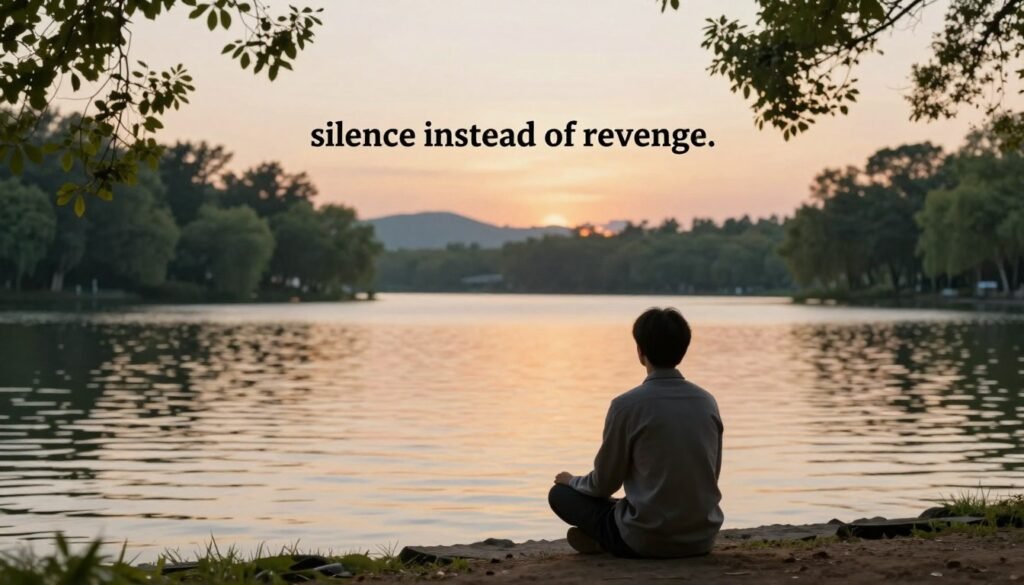
We choose silence over revenge when it protects our heart. It’s not about seeking attention. Healthy boundaries mean taking quiet steps back, not making a big scene.
Imagine saying “access revoked” without making a fuss. It’s a way to set limits without embarrassing anyone. This approach shows respect and control.
Performative silence tries to punish and show off. But humble silence preserves our dignity. It invites us to reflect and heal quietly. Use silence to heal yourself. Try prayer, therapy, or reading Scripture. Stay away from social media, which can reopen old wounds.
Contemplative silence has roots in ancient traditions. When we pray in silence, we often find God’s grace and healing.
- Set clear, simple limits with an “access revoked” response when needed.
- Choose inward repair over outward performance to protect emotional health.
- Pair silence with action: counseling, journaling, and steady routines.
We maintain healthy boundaries without anger. Quiet healing is a prayerful practice. It brings peace where pain once was.
Forgiveness vs. Forgetting: Reframing What Peace Means
When trauma or betrayal hits hard, we often struggle with forgiveness vs forgetting. Forgiveness doesn’t mean ignoring harm or forgetting its effects. It’s about choosing to break free from bitterness and the urge to seek revenge.
It’s possible to remember lessons without being trapped by pain. Forgetting is not always easy or immediate. Yet, we can hold onto wisdom while letting go of pain. This balance helps us understand the difference between forgiving and ignoring harm.
Forgiving means we stop reliving the pain every day. Finding closure doesn’t always need an apology. We can find peace by acknowledging the hurt, sharing our feelings, and choosing to forgive.
Many turn to faith for guidance in forgiveness. Through prayer, we find the strength to let go of anger and seek healing. Following God’s call to forgive can lead to emotional healing and stronger community bonds.
Here are some practical steps to turn forgiveness into action:
- Acknowledge the hurt and its impact on your life.
- Express feelings honestly, in prayer, to a pastor, or with a counselor.
- Decide to release the need for vengeance, even if memory remains.
- Seek God’s help and lean on community for ongoing support.
Forgiveness and faith don’t erase the past, but they shape our future. As we let go, our hearts can heal. Peace becomes a choice we make, not a forced forgetfulness of our past.
Cultural Narratives About Revenge and Justice
We see stories of revenge everywhere. Movies like The Count of Monte Cristo show it as a way to find peace. Books also tell tales of characters getting their honor back after being wronged. These stories can affect how we feel when we’re hurt.
In real life, seeking revenge through media doesn’t always bring peace. A public shaming might feel good at first. But it can damage relationships and leave people feeling drained.
Social media makes these patterns worse. Online attacks and trials can seem like quick justice. But they can also lead to more harm and hurt feelings.
It’s important to know the difference between justice and vengeance. Justice aims to fix things fairly and protect everyone. Vengeance is about getting back at someone, which can cause more harm. Our faith teaches us to seek mercy and work towards healing.
Practical faith teaches us to choose healing paths. Churches and faith groups often support reconciliation and counseling. These efforts help fix relationships and support emotional healing, not just seek revenge.
We should think carefully about the messages we see and the truth of our experiences. Ask yourself if an action brings dignity or causes more harm. Choosing small acts of kindness, setting boundaries, and seeking support can heal better than revenge.
Practical daily practices to reduce the pull of revenge
We start by acknowledging the hurt. Journaling helps us accept and name our pain. Writing just one page a day brings clarity.
We take back our power by not waiting for an apology. Doing small things like taking a walk or calling a friend helps. This way, we focus on healing instead of seeking revenge.
Talking to someone we trust or a counselor helps too. Sharing our feelings can ease the burden in our hearts. This makes it easier to make wise choices.
We replace thoughts of revenge with goals for growth. Setting goals like learning something new or being more patient helps. This shift in focus reduces our urge for revenge.
We also set healthy boundaries. Taking a step back, like muting someone or limiting meetings, gives us space. This protects our peace while we heal.
Prayer and meditation help us release our burdens. Reading short verses like Psalm 34:18 or Philippians 4:6 each morning gives us hope. These practices combine faith with forgiveness.
Simple breathing and mindfulness exercises also help. Try breathing for one minute when you feel angry. These practices calm our minds and bodies.
We create daily rituals to change our heart’s focus. Keeping a gratitude list, doing acts of service, and attending community worship helps. These habits replace bitterness with positive feelings and reduce our urge for revenge.
Keep your practices simple and short. Start with two practices for one week. Repeating small successes helps forgiveness become a habit, and revenge loses its appeal.
Reframing the “Most Powerful Revenge” as Healing and Growth
We often think the best revenge is success. But we believe in a different approach. When we’re hurt, choosing healing means turning pain into purpose. This shift frees us from bitterness and opens a path to growth.
Revenge turned to growth is about small steps every day. We seek counseling for deep wounds, pray and reflect with others, and set healthy boundaries. These actions honor our pain without letting it control us.
Scripture guides us in this journey. Romans 12:19–21 and Matthew 5:44 teach us to trust God and love our enemies. Choose healing as a way to resist anger. Let growth after betrayal be your witness. We validate your hurt and walk with you toward peace.